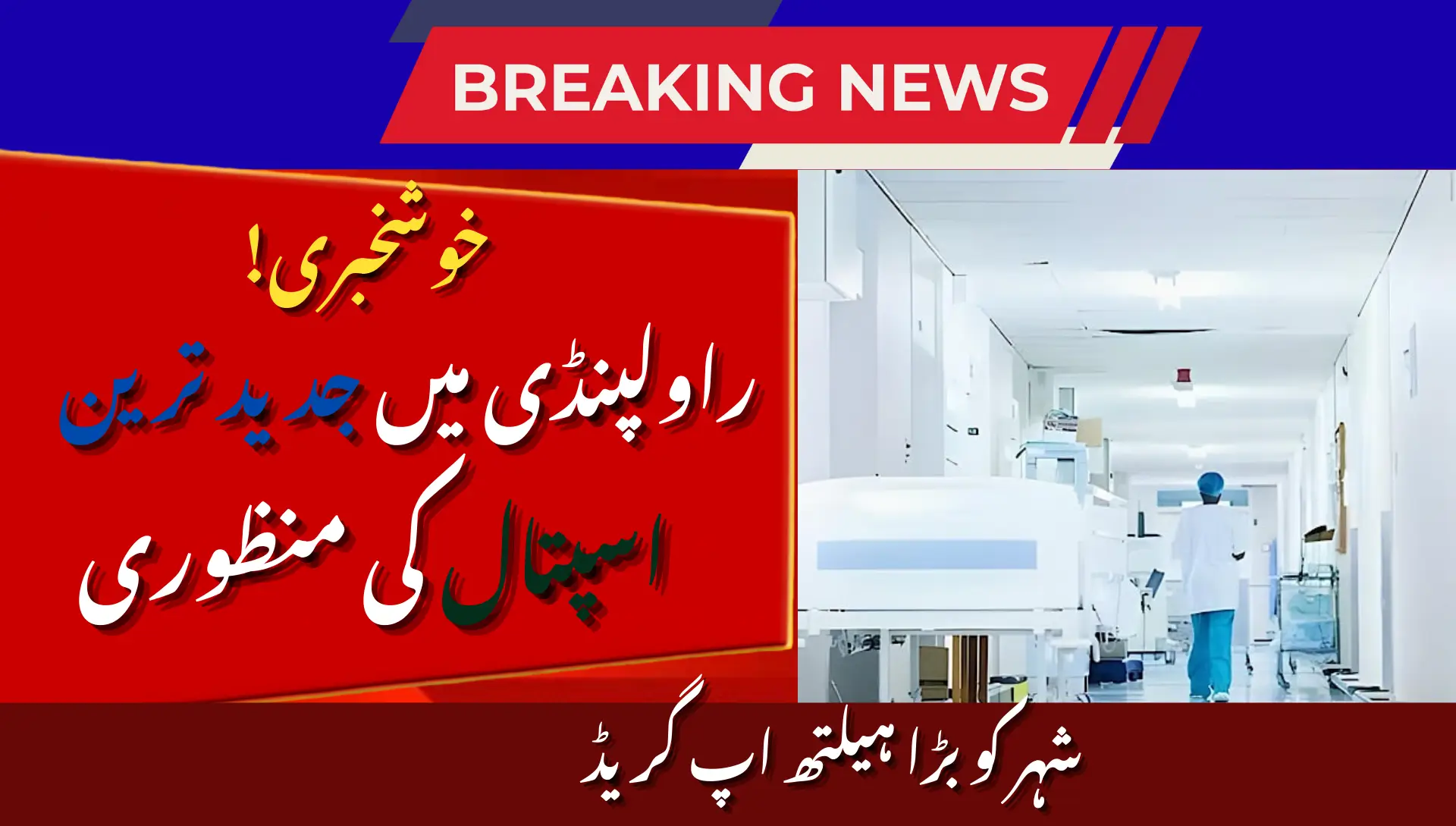
Rawalpindi Approves New Modern Hospital: Big City Upgrade Planned (2025). Rawalpindi finally gets a big healthcare upgrade as authorities approve a new modern hospital in Jhanda Chichi, addressing years of overcrowding in city hospitals. This new development doesn’t just strengthen Rawalpindi’s healthcare system it reshapes the city’s entire planning strategy for 2025 and beyond.

RDA Approves New Modern Hospital in Rawalpindi (2025 Update)
The Rawalpindi Development Authority (RDA) has officially approved the construction of a state-of-the-art hospital in the Jhanda Chichi locality one of the city’s most densely populated and underserved areas.
The decision came during a high-level meeting chaired by RDA Director General Kinza Murtaza, marking one of the biggest healthcare expansions Rawalpindi has seen in recent years.
Why the New Hospital Matters
- Existing government hospitals are overloaded
- Residential areas have grown rapidly
- Emergency response times are slowed by traffic chokepoints
- Medical access for low-income communities is limited
The new hospital aims to solve these issues with smart planning, modern medical facilities, and better distribution of healthcare resources across the city.
A Big Step Toward Better Healthcare Access
RDA officials confirmed that the hospital is being developed to reduce patient load on major hospitals such as:
- Holy Family Hospital
- Benazir Bhutto Hospital
- DHQ Hospital
- CMH (overflow impact from nearby zones)
Key Healthcare Benefits Expected
1. Shorter Patient Wait Times
Rawalpindi’s hospitals often struggle with overwhelming patient influx. The new hospital is expected to significantly cut down waiting times.

2. Improved Emergency Services
Jhanda Chichi connects multiple major arteries — ideal for fast ambulance movement.
3. Better Healthcare Coverage for Southern Rawalpindi
Residents of:
- Jhanda Chichi
- Dhok Kala Khan
- Tench Bhatta
- Dhoke Syedan
- Chaklala
will get closer, more reliable medical access.
RDA’s 2025 Masterplan: A Citywide Upgrade Begins
While the hospital approval is the headline, it is part of a broader transformation plan aimed at reorganizing Rawalpindi’s urban pressure zones.
Major City Facilities Being Relocated to Ring Road Zones
RDA approved shifting several large civic and commercial facilities to designated zones near the Rawalpindi Ring Road, including:
- Wholesale fruit & vegetable markets
- Transport terminals
- Educational institutions
- Industrial units
This move aims to decentralize Rawalpindi’s congested inner-city belt.
How the Ring Road Will Reshape Rawalpindi
The Ring Road corridor is being positioned as the backbone of Rawalpindi’s 2025 urban expansion.
Top Benefits of the New Zone Relocations
Reduced Traffic Congestion
Moving high-traffic facilities to the outskirts will free up inner roads such as:
- Murree Road
- Airport Road
- Tipu Road
- Saddar corridors
Lower Pollution Levels
Industrial units near residential zones currently create noise & air pollution problems. Relocation will improve environmental quality.
Balanced City Growth
Instead of expanding only toward Islamabad, Rawalpindi will now grow in all directions strategically.
New Dedicated ‘Health Zones’ Coming to Rawalpindi
One of the most exciting developments is RDA’s plan to create specialized health zones along the Ring Road.

What Will These Health Zones Include?
- Hospitals
- Diagnostic labs
- Pharmacy clusters
- Emergency centers
- Training institutes
- Medical warehouses
- Blood banks
This approach mirrors modern urban models used in Dubai, Istanbul, and Kuala Lumpur.
Official Departments Assigned for Zone Planning
DG Kinza Murtaza directed four major departments to identify and allocate suitable land:
| Directorate | Responsibility |
|---|---|
| Engineering Directorate | Infrastructure development, utilities mapping |
| Metropolitan Planning & Traffic Engineering | Structural layout, traffic flow optimization |
| Estate Management Directorate | Land allocation, asset management |
| Land Development Directorate | Surveys, land acquisition & approval |
This multi-department strategy ensures that the project doesn’t face delays — a common issue in earlier city development plans.
Transport Terminals to be Shifted for Better Connectivity
Transport terminals cause major congestion near:
- Soan Bus Stop
- Pirwadhai
- Faizabad belt
RDA plans to shift them to the starting and ending nodes of the Ring Road.

This Will Improve:
- Inter-city transport efficiency
- Goods movement
- Passenger convenience
- Emergency vehicle flow
- Road safety on GT Road & Murree Road
Why This Development Is a Big Deal for Rawalpindi Residents
1. Smart City-Level Healthcare Planning
Instead of adding small clinics, a fully equipped modern hospital is being built at a strategic point.
2. Massive Urban Pressure Relief
Relocating markets and terminals will unclog roads and boost quality of life.
3. Better Investment and Real Estate Growth
Areas around the new hospital and Ring Road are expected to see rising property value in 2025.
4. Modernized City Infrastructure
This marks a shift from scattered development to planned urban expansion.
FAQs
Where will the new modern hospital be built in Rawalpindi?
The new hospital will be built in the Jhanda Chichi area, a densely populated locality in central Rawalpindi.

Why is RDA relocating markets and terminals?
To reduce traffic congestion, improve air quality, and rebalance the city’s growth by shifting high-traffic facilities to Ring Road zones.
What benefits will the new hospital provide to Rawalpindi residents?
Better emergency services, shorter waiting times, improved healthcare coverage, and reduced pressure on existing hospitals.
When will the new health zones be developed?
Health zones are part of RDA’s 2025 development framework and will progress alongside Ring Road expansion.
How will Ring Road improve Rawalpindi’s connectivity?
By shifting transport terminals to Ring Road nodes, traffic inside the city will reduce, and inter-district travel will become smoother.
Conclusion
Rawalpindi’s approval of a new modern hospital in Jhanda Chichi marks a major step toward improved healthcare, smarter city planning, and sustainable growth. With dedicated health zones, relocated commercial hubs, and better transport management, Rawalpindi is finally moving toward a future-ready urban model.