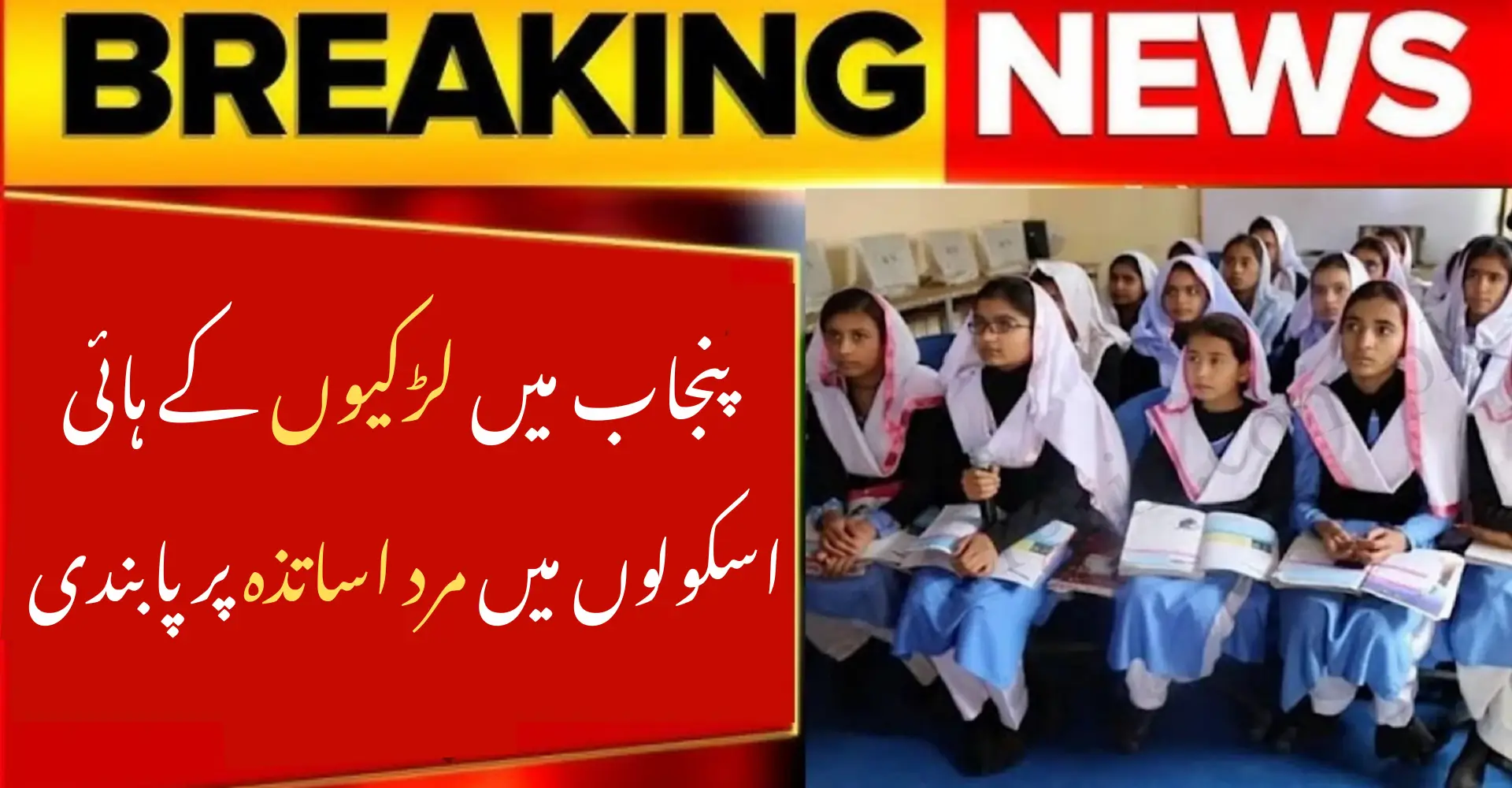
Punjab Bans Male Teachers in Girls’ High Schools: What This Means in 2025. Punjab’s recent decision to ban male teachers in girls’ high and higher secondary schools has sparked intense public debate. Many parents are asking why such a major shift was needed and how it will affect students’ learning environments. This article explains the policy update, its background, and its implications in 2025 using verified details and SEO-friendly insights.

Why Punjab Banned Male Teachers in Girls’ Schools
In early 2025, the Punjab Education Foundation (PEF) officially directed its partner institutions to remove all male teachers from girls’ high and higher secondary sections. According to officials, the decision was made to ensure a more secure, comfortable, and culturally appropriate learning environment for female students.
Official Reasons Behind the Ban
PEF sources highlighted several concerns:

- Learning Disruptions: Reports suggested that the presence of male teachers in girls’ sections created discomfort for some students.
- Safety & Sensitivity: Female students, especially in higher classes, reportedly learn better under female instructors.
- Cultural Compatibility: Many parents expressed a preference for female teachers in girls’ educational settings.
- Policy Standardization: The move aligns with similar guidelines already followed by other provinces and private institutions.
PEF warned that strict action would be taken against any school failing to implement the revised staffing policy.
Key Instructions Issued to Schools
The 2025 directive included clear operational steps that all partner schools must follow:

Mandatory Compliance Requirements
- Remove male teachers from girls’ sections immediately
- Hire qualified female teachers for all high and higher secondary classes
- Submit compliance reports to PEF regional offices
- Maintain updated staff lists for monitoring
- Ensure no mixed-gender teaching in girls-only campuses
Penalties for Non-Compliance
Schools failing to follow the policy may face:
- Funding suspensions
- Removal from PEF partner program
- Administrative disciplinary action
How This Policy Affects Students, Teachers, and Schools
To understand the broader impact, here is a breakdown of how different stakeholders will be affected:

Impact on Students
- Increased comfort and relatability
- Improvement in class participation
- Reduced hesitation in asking sensitive or personal academic questions
Impact on Female Teachers
- More job opportunities in government-supported schools
- Preference for hiring female educators in science, mathematics, and humanities
Impact on School Administrations
- Pressure to recruit qualified female staff
- Need for restructuring teacher timetables
- Requirement for compliance reporting
Comparison Table: Old System vs. New 2025 Policy
| Criteria | Previous Practice | New 2025 PEF Policy |
|---|---|---|
| Teacher Gender | Male + Female allowed | Only female teachers allowed |
| Student Comfort Level | Reportedly mixed | Expected higher comfort |
| Policy Enforcement | Flexible | Strict & monitored |
| Parent Satisfaction | Varied opinions | Generally higher support |
| Compliance | Not mandatory | 100% mandatory |
Is This Policy Beneficial? A Balanced Analysis
Potential Benefits
- Enhanced girls’ safety and emotional comfort
- Better classroom communication
- Reduction in cultural concerns raised by parents
- Increase in female employment in the education sector
Potential Challenges
- Shortage of female teachers in rural areas
- Increased hiring pressure on low-budget schools
- Possible delays in subjects requiring specialized instructors
Expert Opinions
Education researchers argue that gender-sensitive environments often improve academic performance in conservative regions. However, experts also warn that the government must ensure adequate availability of female educators across Punjab.
FAQs
Why did Punjab ban male teachers in girls’ schools?
The ban was introduced to ensure safety, comfort, and cultural suitability for female students in high and higher secondary classes.
Does the ban apply to all schools in Punjab?
Currently, the policy specifically targets PEF partner schools, but similar guidelines may expand in the future depending on government decisions.
Are male teachers completely removed from all school sections?
Only the girls’ high and higher secondary sections are affected. Boys’ sections are not included.
How soon must schools comply?
PEF ordered immediate compliance and warned that delays could result in penalties.
Will this affect the quality of education?
Quality depends on the availability of skilled female educators. With proper recruitment, the policy may positively impact learning outcomes.
Conclusion
Punjab’s decision to ban male teachers in girls’ high and higher secondary schools marks a major restructuring in the province’s education system. While many parents and educators see it as a step toward safer, more comfortable schooling for girls, schools may face some short-term hiring challenges.
If you’re an educator, parent, or school administrator, share your thoughts in the comments — how do you feel about this 2025 policy update?