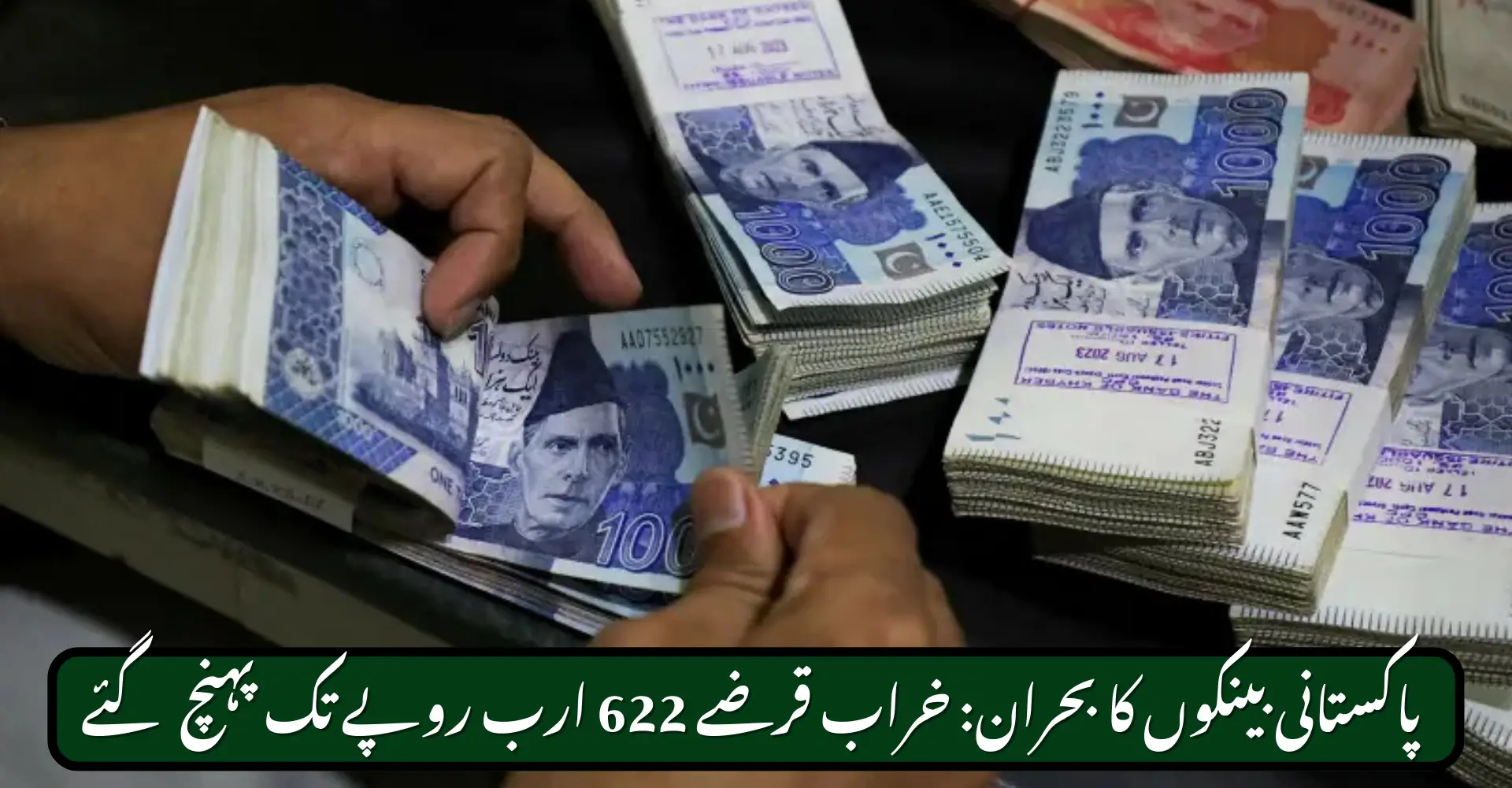
Bad Loans in Pakistan: Rs. 622 Billion Crisis Deepens in 2025. Pakistan’s banking sector is entering one of its toughest phases as bad loans surge to Rs. 622 billion, raising concerns about the country’s economic stability. With slow courts, weak recovery systems, and rising NPLs, banks are tightening credit especially for SMEs, farmers, and homebuyers. This article explains the crisis in simple, human-friendly language and highlights why the system must be fixed in 2025.

What’s Driving Pakistan’s Rs. 622 Billion Bad Loan Surge?
Pakistan’s Non-Performing Loan (NPL) ratio has jumped to 7.4%, significantly higher than many regional markets. For reference:
| Country | NPL Ratio | Year |
|---|---|---|
| Pakistan | 7.4% | 2024–25 |
| India | 3.9% | 2024 |
| Sri Lanka | 5.4% | 2024 |
| UK | 1.1% | 2024 |
| USA | 1.3% | 2024 |
Slow Courts and Weak Enforcement Paralyze Loan Recoveries
Pakistan’s loan recovery system is stuck in a cycle of delays. Banks repeatedly face challenges such as:
Endless Stay Orders
Borrowers often secure stay orders that pause cases for months—or even years.
Poor Law Enforcement Support
Banks report that police frequently decline to help in asset seizure despite court orders.
Missing or Disputed Collateral
Many borrowers have:

- Untraceable assets
- Disputed property ownership
- Non-updated land records
- Politically influenced interference
Even when courts decide in favor of banks, the enforcement mechanism is too weak to ensure recovery.
State-Owned Banks Under Maximum Pressure
Pakistan’s top 13 banks now carry more than Rs. 622 billion in bad loans, but government-owned banks hold the largest share due to:
- Legacy loans
- Loans issued under political influence
- Weak internal controls
- Higher exposure to risky borrowers
Private banks have also tightened credit, but state banks face the sharpest rise in NPLs.
Banks Shift Toward Government Lending
As risks increase, banks prefer lending to the government rather than the private sector. This creates a crowding-out effect, where private businesses receive less financing.
Impact on Key Sectors
- SMEs: Unable to scale due to lack of working capital
- Farmers: Facing costly inputs without financing
- Consumers: Car, bike, and home financing dropping steadily
- Housing Sector: Mortgage lending remains frozen
Implication for Economic Growth
When banks avoid private lending, investment slows, jobs shrink, and GDP growth remains weak. This cycle worsens Pakistan’s economic outlook for 2025.

Learning From Sri Lanka’s Non-Judicial Recovery Model
Experts suggest Pakistan must adopt a system similar to Sri Lanka’s non-judicial foreclosure model, where banks can auction collateral without long court battles.
Benefits of a Non-Judicial Model
- Faster recoveries
- Lower NPL ratios
- More confidence in lending
- Reduced litigation burden
- Improved credit availability to growth sectors
If Pakistan introduces similar reforms in 2025, SMEs, startups, and housing markets could all see recovery.
Economic Risks if Recovery System Remains Unreformed
The consequences of ignoring the recovery crisis are severe:
Shrinking Credit Growth
Less borrowing → fewer investments → slower industrial expansion.
Higher Lending Rates
Banks raise interest rates to compensate for rising NPLs.

Housing Market Decline
Mortgage financing may remain stalled, pushing homeownership further out of reach.
Declining Investor Confidence
Foreign and local investors hesitate due to financial instability.
Long-Term Impact
- Job creation slows
- Private sector weakens
- Economic growth continues to dim
Data Summary — Pakistan’s Bad Loan Crisis at a Glance
| Category | Status (2024–2025) |
|---|---|
| Total Bad Loans | Rs. 622 billion+ |
| NPL Ratio | 7.4% |
| Most Affected Banks | State-owned banks |
| Key Affected Sectors | SMEs, agriculture, housing |
| Recovery System | Slow, judicial, weak enforcement |
| Recommended Solution | Non-judicial foreclosure model |
What Can Fix Pakistan’s Bad Loan Problem in 2025?
1. Fast-Track Loan Courts
Specialized courts with shorter deadlines can significantly reduce pending cases.
2. Digital Property Verification
A centralized digital land record system would prevent fake or disputed collateral.
3. Empower Banks for Non-Judicial Auctions
Allowing direct collateral auctioning—without court involvement—can drastically improve recoveries.

4. Government Support for SME Lending
Guarantee schemes can revive private-sector credit.
5. Strengthening Legal Enforcement
Police and local authorities must be legally bound to assist banks in recovery operations.
FAQs
What is causing the rise in bad loans in Pakistan?
Slow courts, weak recovery systems, non-traceable collateral, and poor enforcement are the major reasons for rising NPLs.
How big is Pakistan’s NPL crisis in 2025?
Bad loans have crossed Rs. 622 billion, with an NPL ratio of 7.4%.
Which banks are most affected?
State-owned banks carry the heaviest burden of bad loans due to legacy issues and political lending.

How does this crisis affect small businesses?
SMEs face declining credit availability, making expansion and operations difficult.
Can Pakistan adopt Sri Lanka’s loan recovery model?
Yes, experts say a non-judicial model could greatly improve recoveries and restore credit flow.
Conclusion
Pakistan’s surge in bad loans to Rs. 622 billion reveals a deep structural problem rooted in slow courts and weak enforcement. Unless the country modernizes its recovery system—especially by introducing non-judicial models—banks will continue shifting toward government lending, leaving the real economy starved of credit.