
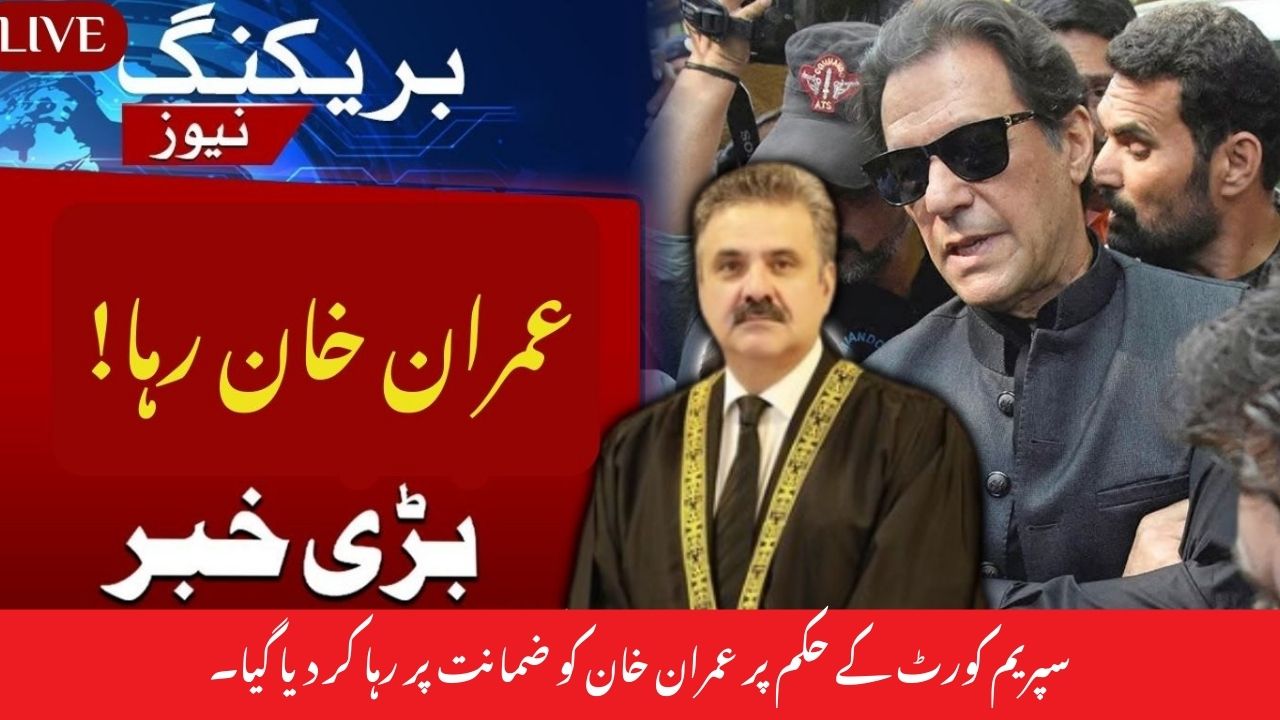
Pakistan’s Supreme Court has granted bail to former prime minister and PTI founder Imran Khan in eight cases stemming from the May 9, 2023 unrest—overturning the Lahore High Court’s earlier refusal and handing Khan a major legal victory. The three-judge bench led by Chief Justice Yahya Afridi approved the pleas after day-long arguments and chamber consultations for the written order.

While this ruling is significant, it does not automatically free Khan from Adiala Jail. He remains incarcerated due to a separate 14-year conviction in the £190 million Al-Qadir Trust case (and other matters still at various stages), which would require its own relief for him to walk out. In short: bail in the May 9 cases narrows—but doesn’t close—the legal path to release.
پاکستان کی سپریم کورٹ نے سابق وزیر اعظم اور تحریکِ انصاف کے بانی عمران خان کو 9 مئی 2023 کے واقعات سے متعلق آٹھ مقدمات میں ضمانت دے دی ہے—جس میں لاہور ہائی کورٹ کی پہلے کی مسترد کردہ درخواست کو کالعدم قرار دیتے ہوئے خان کو بڑی قانونی فتح حاصل ہوئی۔ چیف جسٹس یحییٰ آفریدی کی سربراہی میں تین ججوں پر مشتمل بینچ نے دن بھر دلائل اور چیمبر مشاورت کے بعد تحریری حکم کے لیے درخواستیں منظور کیں۔
اگرچہ یہ فیصلہ اہم ہے، مگر اس سے خان خود بخود اڈیالہ جیل سے آزاد نہیں ہوتے۔ وہ 190 ملین پاؤنڈ کے القادر ٹرسٹ کیس میں 14 سالہ سزا (اور دیگر مختلف مقدمات جو مختلف مراحل میں ہیں) کی وجہ سے قید میں ہیں، اور ان سے رہائی کے لیے الگ ریلیف درکار ہوگی۔ مختصراً: 9 مئی کے مقدمات میں ضمانت قانونی راستہ تو محدود کرتی ہے، مگر مکمل طور پر بند نہیں کرتی۔

Key Takeaways
- Bail granted in eight May 9 cases: The Supreme Court accepted Khan’s bail pleas, reversing the Lahore High Court’s June decision that had upheld an anti-terrorism court’s denial.
- Bench composition and process: A reconstituted three-member bench—CJP Yahya Afridi, Justice Muhammad Shafi Siddiqui, and Justice Hasan Azhar Rizvi—heard the matter and called parties into chambers before issuing the written order.
- Interim nature of bail findings: Prosecutors argued (and the Court noted) that observations during bail are temporary and should not prejudice the trial—central to how the decision is framed.
- Immediate release? Not yet: Khan still faces incarceration due to the Al-Qadir Trust conviction; separate appellate or bail relief is needed there.
What Exactly Did the Supreme Court Decide?
The apex court allowed Imran Khan’s eight bail petitions linked to the May 9 unrest—cases that include allegations ranging from attacks on public property to clashes with law enforcement. The order set aside the Lahore High Court’s earlier refusal and restored bail parity with co-accused who had been granted relief in comparable circumstances. In doing so, the bench leaned on long-standing principles that bail determinations are provisional and must not prejudge the merits of a future trial.
The court also opted for a measured procedural approach, meeting counsel from both sides in chambers before dictating its written order—an effort to keep commentary within bail’s limited scope so as not to contaminate forthcoming trials.
How Did We Get Here? A Short Legal Timeline
- Nov 27, 2024: An anti-terrorism court in Lahore denies bail to Khan in several May 9 cases.
- June 2025: The Lahore High Court upholds the denial; Khan appeals to the Supreme Court.
- Aug 21, 2025: The Supreme Court grants bail in all eight May 9 cases, reversing the LHC.
Parallel to this, Khan’s legal troubles expanded beyond May 9: in January 2025, a court sentenced him to 14 years in the Al-Qadir Trust case—a separate proceeding that now stands between him and physical release from custody.
Bench Shuffle—and Why It Mattered
Before today’s decision, the Supreme Court reconstituted the bench hearing Khan’s bail cases, replacing Justice Miangul Hassan Aurangzeb with Justice Hasan Azhar Rizvi. The re-formed bench—now CJP Afridi, Justice Siddiqui, and Justice Rizvi—heard the arguments, asked pointed questions about the scope of bail observations, and ultimately ruled in Khan’s favor. Bench composition matters because each judge brings distinct views on bail thresholds and the weight of precedent, especially in politically charged cases.
Legal Standard: Why “Bail” ≠ “Acquittal”
Bail is not a mini-trial. Pakistani jurisprudence consistently treats bail findings as interim, meant to ensure liberty pending trial unless there are strong reasons to withhold it (such as risks of tampering or absconding). The prosecution explicitly argued this interim principle in court, and the justices echoed it—underscoring that today’s order does not evaluate guilt or innocence in the May 9 prosecutions. Those trials must run their course.
In practical terms, the Court appears to have considered factors like parity with co-accused, delay, and whether the accusations, as framed, meet the threshold to keep an accused incarcerated pre-trial. Such reasoning is routine in bail matters, particularly when the state has already proceeded against multiple defendants arising from the same fact pattern.

Does the Order Free Imran Khan Today?
No, not by itself. The Supreme Court’s decision cleans the slate on May 9 bail, but Khan remains in custody because of the Al-Qadir Trust conviction (14 years) and any other active remands. To physically leave jail, he needs separate relief (such as suspension of sentence, appeal-stage bail, or acquittal) in those non–May 9 matters. Government officials and news outlets were quick to remind the public of this limit.
Political Ripples: What Changes Now?
Even without immediate release, the ruling delivers three political effects:
- Narrative Momentum for PTI: The party can claim a judicial win and may leverage it to argue that earlier bail denials were excessive. This helps with fundraising, coalition outreach, and mobilization.
- Pressure on Prosecution Strategy: With eight May 9 bails allowed, prosecutors will likely tighten charge sheets and prioritize the strongest counts for trial to avoid acquittals by default due to delay or weak evidence.
- Focus Shifts to Al-Qadir Appeals: The Al-Qadir Trust conviction becomes the primary gatekeeper to Khan’s liberty. Expect accelerated filings in appellate courts and fresh applications for suspension of sentence/bail pending appeal.
What Happens Next—Legally and Practically
- Written Order & Compliance: Once the written order is issued, trial courts handling the May 9 cases will process sureties and formalities. The state retains the right to oppose any misuse of liberty (e.g., alleged interference with witnesses).
- Appellate Path on Al-Qadir: Khan’s team will push for suspension of sentence and bail pending appeal in the Al-Qadir case, arguing flaws in evidence and procedure. The state will counter that the conviction followed due process in a major public-interest corruption matter.
- Trial Calendars: For May 9 incidents, trial courts may still proceed to frame charges, examine witnesses, and set hearing blocks. Bail simply means Khan can defend himself out of custody on those counts—subject to conditions.
May 9 Cases and the Al-Qadir Roadblock
- May 9, 2023 incidents: After Khan’s brief detention in Islamabad, protests escalated nationwide; scores of PTI workers were arrested and hundreds charged, some under anti-terror laws. These cases vary by incident site and alleged role.
- The Al-Qadir Trust case: In January 2025, Khan and his wife Bushra Bibi were convicted over a land-for-favours arrangement tied to £190 million repatriated by the UK’s National Crime Agency, drawing a 14-year and 7-year sentence respectively. Khan calls the case politically motivated and is appealing.
Expert Lens: Reading the Court’s Signals
Today’s judgment fits within a broader judicial pattern: calibrate pre-trial detention narrowly, particularly in complex, multi-accused political cases, and park the merits for full trials or appeals. By reasserting the interim character of bail orders and acknowledging parity considerations, the Court sought to keep the criminal process on track while limiting pre-trial incarceration to exceptional circumstances. That calibration often becomes more pronounced when years can elapse before final adjudication.

At the same time, the bench reshuffle underscores the Supreme Court’s sensitivity to perceptions of fairness in high-voltage litigation. Rotating one judge while retaining institutional memory can blunt criticism that outcomes hinge on panel composition rather than principle.
Reactions
Early reactions from PTI celebrated the verdict as a vindication of their stance on the May 9 cases. Government voices, however, argued that bail is not exoneration, and pointed to the Al-Qadir conviction as the real bar to release. The immediate political message is split: symbolic win for PTI on May 9; substantive hurdle remains on corruption charges.
FAQs
1) Does this mean Imran Khan will walk out of jail?
Not yet. The Supreme Court’s order grants bail only in May 9 cases. Khan still needs separate relief in the Al-Qadir Trust case (and any other active matter) before he can be released.

2) What does “bail” actually imply here?
Bail allows an accused to remain out of custody while cases proceed, usually under conditions (sureties, travel limits, appearance requirements). It does not determine guilt or innocence, and its observations don’t bind the trial court.
3) Why did the Supreme Court reverse the Lahore High Court?
Although the full reasoning will appear in the written order, indicators include the interim nature of bail, parity with co-accused, and concerns about final findings at the bail stage influencing trial merits.
4) Who was on the bench? Did it change mid-way?
Yes. The bench was reconstituted to include Justice Hasan Azhar Rizvi in place of Justice Miangul Hassan Aurangzeb, alongside CJP Afridi and Justice Siddiqui.
5) What’s the status of the Al-Qadir case?
A trial court in January 2025 sentenced Khan to 14 years (and Bushra Bibi to seven) in the £190m Al-Qadir case. Appeals and applications for suspension of sentence/bail are the next steps if Khan seeks release.