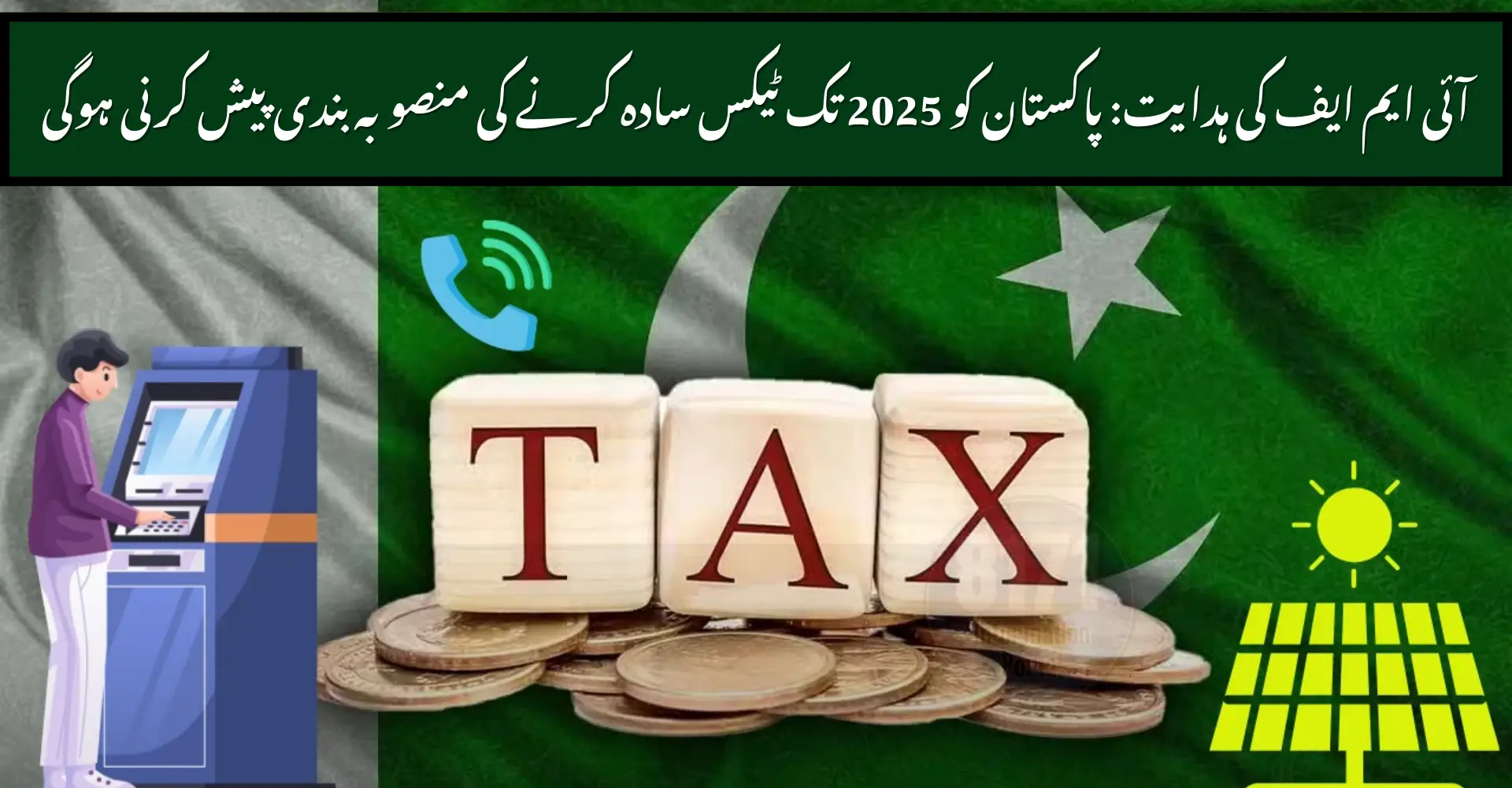
Tax Simplification Plan Pakistan Must Release in 2025: IMF’s New Demand Explained. Pakistan has been urged by the International Monetary Fund (IMF) to release a comprehensive Tax Simplification Plan by next year, marking one of the biggest fiscal reform pushes the country has seen in years. This article explains what the IMF wants, why 2025 is a crucial deadline, and how these reforms could reshape Pakistan’s tax ecosystem.

Why IMF Wants Pakistan’s Tax Simplification Plan in 2025
Pakistan’s current tax structure is complex, overloaded with exemptions, special regimes, and heavy withholding taxes, which discourage investment and widen loopholes.
To stabilize Pakistan’s economy, the IMF is demanding a tax system that is:
- Simpler
- Transparent
- Investment-friendly
- Digitally governed
The IMF’s directive aims to improve revenue collection, enhance trust in tax administration, and reduce Pakistan’s dependency on external borrowing.
IMF’s Key Conditions for Pakistan’s Tax Reform Plan
Below is a breakdown of what the IMF expects Pakistan to deliver before the next fiscal year:
1. Tax Simplification Strategy (Deadline: May 2026, but urged for early release in 2025)
The IMF wants Pakistan to prepare and publish a comprehensive tax simplification roadmap, which includes:
- Reducing the number of taxes
- Eliminating overlapping regulations
- Streamlining compliance processes
- Modernizing tax technology
2. Reduction in Tax Exemptions
Pakistan currently offers hundreds of tax exemptions to influential sectors such as:

- Real estate
- Agriculture
- Manufacturing
- Energy
- Trading
The IMF is pushing for:
- Gradual removal of sector-specific exemptions
- Removal of preferential group treatment
- Broadening of the tax base
3. Scaling Back Special Tax Regimes
Special tax regimes often benefit:
- Large corporations
- Exporters
- Retailers
- Industries with political influence
The IMF says these regimes cause revenue leakage and policy inconsistency.
Reforms will include:
- Universal tax slabs
- Reduced special-case tax treatments
- Transparent reporting of sector-wise tax data
4. Reduction of Withholding and Advance Taxes
Pakistan’s tax system relies heavily on withholding taxes, even for non-filers.
The IMF wants:
- Fewer withholding tax lines
- A shift toward direct taxation
- Simplified advance tax policies
5. Limiting FBR’s Authority to Make Rules
The current structure gives the FBR broad regulatory powers.
The IMF recommends:

- Rule-making through Parliament, not FBR
- Greater checks and balances
- Clear separation of administration and policymaking
6. Annual Progress Reports on Tax Reforms
To ensure transparency, the IMF wants Pakistan to:
- Publish yearly tax reform progress reports
- Upload all changes publicly
- Include performance indicators for FBR operations
7. Organizational Overhaul of the FBR
The IMF is particularly concerned about:
- FBR’s structural inefficiencies
- Weak accountability systems
- Field office discretionary powers
Recommended reforms include:
- Reducing powers of field officers
- Independent oversight bodies
- Integrated digital auditing systems
8. Mandatory Publication of Petroleum Levy Audit
A crucial IMF condition involves transparency around fuel taxes.
Pakistan must:
- Publish the Petroleum Levy audit within one year
- Show transparent collection and allocation of funds
- Provide audit trails for future accountability
Comparison Table: Current System vs. IMF-Recommended System
| Area | Current Pakistan System | IMF’s Recommended System | Expected Outcome |
|---|---|---|---|
| Tax Structure | Complex, multi-tier | Simplified, fewer layers | Higher compliance |
| Exemptions | Hundreds of sector-based | Limited, targeted | Higher revenue |
| Withholding Taxes | Heavy reliance | Reduced and streamlined | Fair taxation |
| FBR Powers | Broad authority | Controlled & transparent | Improved governance |
| Reporting | Inconsistent & delayed | Annual mandatory reports | Public accountability |
| Petroleum Levy Audit | Rarely published | Must publish annually | Better oversight |
How a Simplified Tax System Can Benefit Pakistan
A cleaner, more predictable tax system can significantly improve Pakistan’s economic health.
1. Boost Investor Confidence
Investors prefer stable, predictable tax systems.
Simplification means:
- Lower compliance costs
- Fewer surprises
- Increased foreign direct investment (FDI)
2. Expand the Tax Base
Removing exemptions and closing loopholes helps bring:
- Retailers
- High-income professionals
- Property holders
- Digital businesses
into the tax net.
3. Encourage Documentation and Digitalization
A simplified, digital-first system supports:
- e-filing
- automated audits
- transparent records
4. Increase Long-Term Revenue
The IMF estimates that simplifying taxes can raise revenue without raising tax rates—critical for reducing Pakistan’s debt burden.

Expert Analysis: Why IMF Is Pushing Hard Now
Pakistan is negotiating new financing arrangements with the IMF for 2025–2026.
For IMF, tax reform is a non-negotiable condition because:
- Pakistan’s tax revenue-to-GDP ratio is one of the lowest in South Asia
- Multiple exemptions distort economic sectors
- FBR lacks modern governance and accountability tools
The IMF fears Pakistan could slip into another fiscal crisis without long-term structural reform.
FAQs
What tax simplification plan has the IMF asked Pakistan to release?
The IMF wants Pakistan to publish a comprehensive strategy that simplifies tax laws, reduces exemptions, and improves transparency before the next fiscal year.
Why is the IMF pushing for tax reforms in 2025?
Pakistan’s tax system is overly complex and inefficient. IMF reforms aim to stabilize revenue collection and strengthen economic governance.
How will reducing tax exemptions help Pakistan?
Fewer exemptions widen the tax base, increase revenue, and create a fair business environment.

What changes will be made to FBR under the IMF plan?
The IMF recommends limiting FBR’s rule-making powers, restructuring its operations, and improving accountability.
What is the Petroleum Levy audit requirement?
Pakistan must publish a transparent annual audit showing how the Petroleum Levy is collected and used.
Conclusion
Pakistan’s Tax Simplification Plan 2025 is more than just a requirement from the IMF it is a roadmap to long-term economic stability.
If implemented effectively, these reforms could boost investor confidence, increase revenue, modernize tax administration, and reduce fiscal vulnerabilities.